02 June 2026
THE SEA IN STOCKHOLM, THE VASA IN THE SEA, HUBRIS IN THE VASA: THE LAST 20 MINUTES OF PRIDE
Hayy ibn Yaqzan, the immortal hero of Ibn Tufayl, discovered the silent, un wasteful and flawless order of the universe through reason alone while growing up by himself on a deserted island, simply by observing nature. In nature, everything had a measure, every weight had a balance; truth was plain, smooth and free from ostentation. Yet when human beings join crowds and begin to build palaces, avenues and cities, they strangely surrender their reason not to truth, but to pride and grandeur. They forget their own limits and imagine that they can disrupt nature’s unfailing scale merely to display power. One of the most striking examples of those gilded disasters prepared by human hands, born from forgetting one’s limits, awaits us today in Stockholm, on the edge of the cold waters of the Baltic Sea.
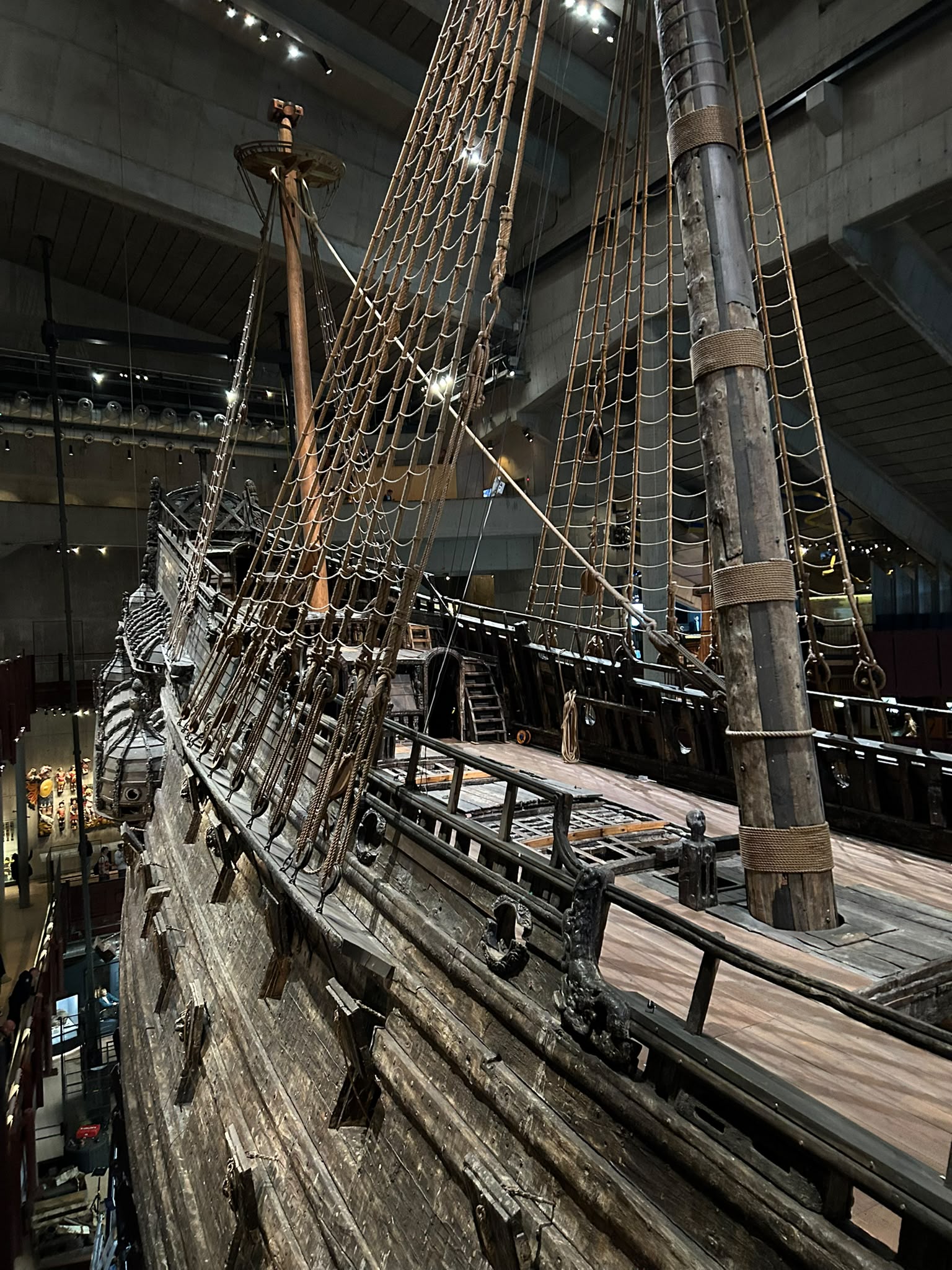
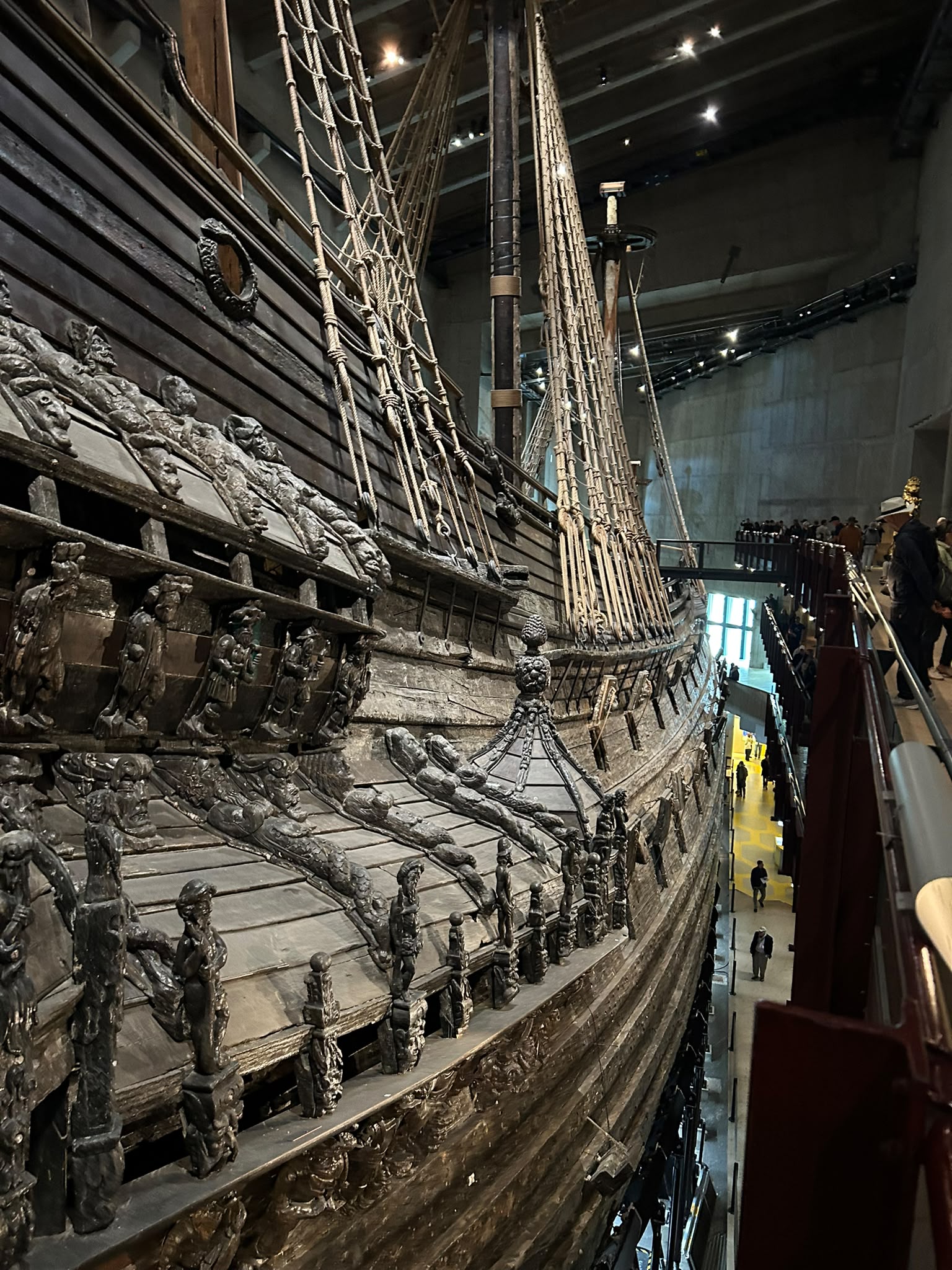
As you cross the windy bridges of the city and step into that dim, domed building on the island of Djurgården, a heavy smell of tar and salt fills your throat. Before you stands a massive wooden corpse, pulled out like a ghost from dark waters, blackened by time and mud. This is not merely a museum; it is, in fact, a magnificent tomb. And before you is the legendary warship Vasa, designed to prove the invincibility of the Swedish Empire to the entire world.
When you look today at this hull sleeping silently under the museum’s darkened lights, it is difficult to imagine the moment when it first met the waters on that August morning in 1628. Because on that day, the Vasa was probably not so black and sorrowful. It was a screaming monument of ostentation, painted in blood red, dazzling gold, sky blue, tar black and pink. More than seven hundred hand-carved figures and sculptures wrapped around its hull like ivy; they were there not to cut through waves, but to shatter the enemy’s mind. With the busts of Roman emperors on its body, King Gustav II Adolf of Sweden almost placed himself on a level with the gods, declaring his unshakable power to his mortal enemy Poland and to all of Europe. Yet that enormous artistic burden, that unbelievable riot of colors, would become the first knot that turned beauty into weight and suffocated the galleon.
Centuries earlier, in the Masnavi, Rumi described precisely this blindness through the story of a lion who believed so deeply in his own strength and invincibility. Following a cunning rabbit, the lion looks into a deep well and mistakes his own reflection in the water for another enemy threatening his throne and forest. What he sees as a flaw is, in fact, nothing other than his own pride. In anger, he jumps into the water and loses his life in that well of pride, actually drowning in his own ego. On that August morning, the Vasa launched in Stockholm harbor was exactly that lion looking into the well. When it looked into the Baltic waters, it believed it would crush its enemies, but in those depths it saw only the reflection of its own enormous and hollow arrogance.
Collapse does not always begin with a storm from outside; sometimes it begins with a deathly silence in the magnificent corridors of the palace. In the blood-scented atmosphere of the Thirty Years’ War, the King’s endless ambition for absolute dominance was ruthlessly pushing the limits of wood and physics. While the ship was still on the slipway, the plans were changed again and again. The shipyard engineers were ordered to lengthen the ship and to build a palace-like upper structure far larger than it could ever carry. The illness and death of the chief shipwright Henrik Hybertsson in the middle of the process was perhaps nature’s first compassionate warning of the approaching disaster. Yet the assistant who took over the work could not utter a single word under the crushing shadow of authority. Just before the ship was launched, during the famous stability test, thirty soldiers ran from one side of the deck to the other, and the ship heeled and flexed so dangerously that the test had to be stopped in horror. From the apprentice nail-maker at the harbor to the foreman, everyone could see that the ship was, in truth, a gilded coffin. But merit and science had already been silenced in the face of absolute power. Within the borders of an entire empire, there was no courage to say to a harsh and intolerant king: “My lord, this ship will sink.” Fear had tied the tongues that should have spoken the truth into blind knots.
What truly dragged the Vasa into those dark waters was not gravity, but that insatiable appetite, that boundless hunger for armament. In the first drawings, there was only one gun deck. But by the King’s last-minute order, a two-level, massive and heavy gun deck was carved into the ship’s chest. Sixty-four bronze machines of death were placed there. This was an intoxication of power completely detached from reality, beyond the comprehension of naval knowledge of the time. Those tons of bronze cannons pulled the ship’s center of gravity far above the waterline, almost toward emptiness. The ballast stones loaded into the belly of the ship were not enough to balance this gigantic arrogance whose feet had been lifted off the ground.
When the calendar showed 10 August 1628, the Vasa left the harbor with all its splendor, golden statues and cannon barrels. That magnificent victory march, which seemed to prove humanity’s triumph over nature, lasted only twenty minutes. Because the sea does not care about human titles, hierarchies or crowns; water has its own unfailing justice. At the harbor exit, an ordinary breeze, so light that an old fisherman would not even turn to look at it, touched the swollen sails of the massive ship and gently tilted it to one side. With that lean, water began to pour in with perfect patience through the lower gun ports that had been left fully open to display the majesty of the cannons to friend and enemy alike. Within seconds, Europe’s greatest instrument of intimidation, that immense work of human labor together with its helpless crew, sank beneath the waters. Wood shattered. People died.
Today, as you look at that massive timber pulled out from time and mud in that dim hall, you begin to think about the deep wells human beings dig with their own hands. The Vasa is not merely a simple engineering error or an unfortunate maritime accident. It is the tragedy of humanity that lost the pure balance Hayy ibn Yaqzan found on his deserted island; the tragedy of a human being crushed beneath his own grandeur, like the lion roaring at his own reflection in the well. It is the silent answer, lasting only twenty minutes yet heavy enough to be remembered for centuries, given by nature to the blind reason of a great empire that forgot its limits, sacrificed merit to fear, and believed it could subdue water and wind with gilded wood.
Asst. Prof. Dr. Emrah TÜNCER