
23 February 2026
Clinical Experience Sharing in the Course Evidence-Based Practices in Hand Rehabilitation
Within the scope of the Evidence-Based Occupational Therapy course conducted by Asst. Prof. Beyza Aslı Bilsel, an important guest lecture was held during Week 2, aiming to enhance students’ clinical and professional competencies. An occupational therapist actively working in the field of hand rehabilitation at Başakşehir Çam and Sakura City Hospital, Sümeyra Ateş, attended the course as a guest speaker.
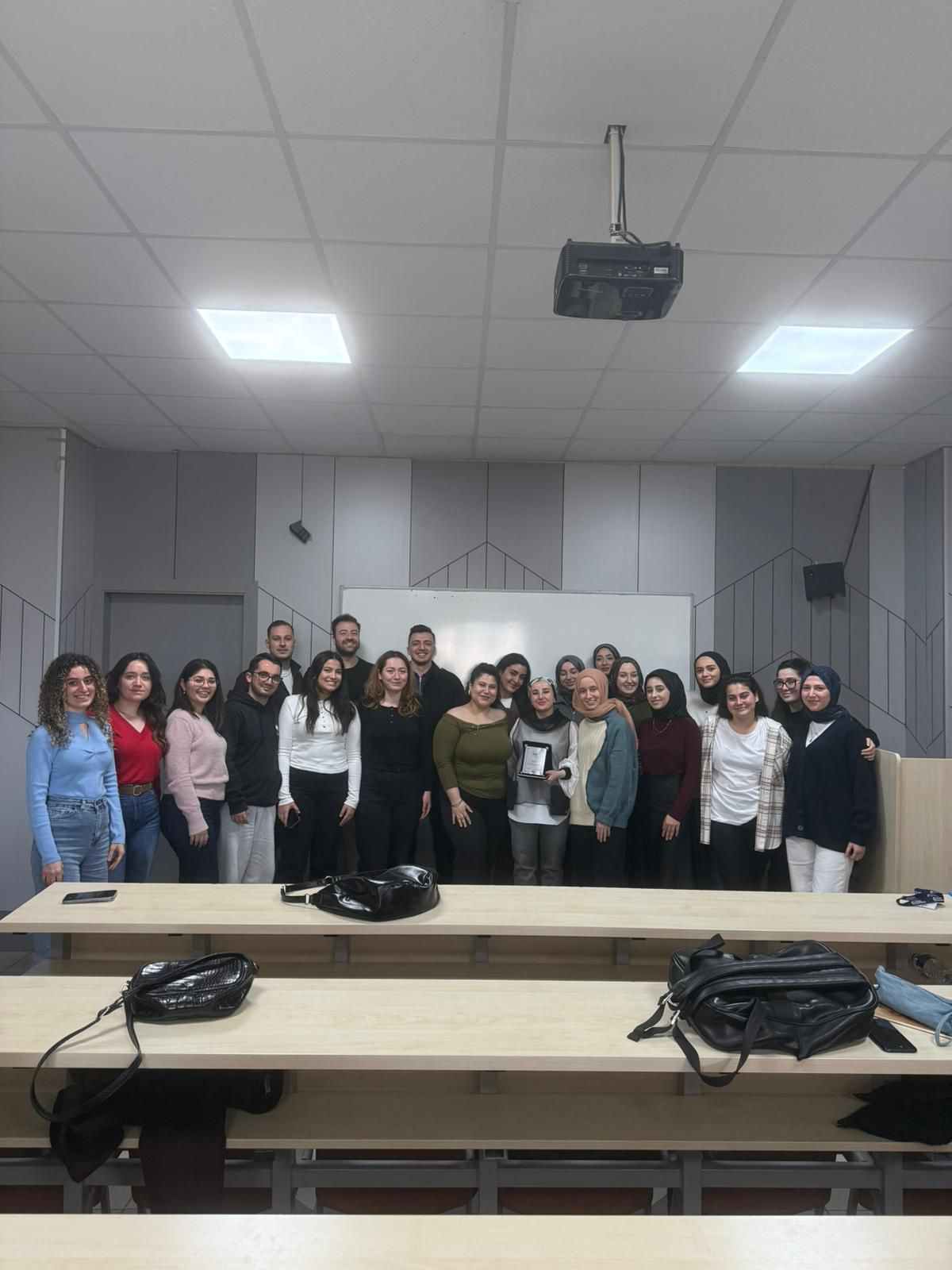
As an alumna of the department, the guest occupational therapist shared her professional journey following graduation, providing students with in-depth insights into the transition from academic education to clinical practice within a public hospital setting. In this respect, the session served not only as a course activity but also as valuable career guidance for students preparing for professional practice.
During the lecture, evidence-based approaches in post-surgical hand rehabilitation were discussed in detail, with a particular focus on how scientific evidence is integrated into daily clinical decision-making. The guest speaker presented common clinical conditions encountered after hand surgery, emphasizing assessment procedures, goal setting, intervention planning, and outcome monitoring through real-life case examples.
Through these case discussions, students were able to observe how theoretical knowledge is translated into practical application. A holistic perspective was adopted to demonstrate patient-centered evaluation processes and individualized intervention planning based on current evidence.
A significant component of the session addressed working conditions in public hospitals. Topics such as the role of occupational therapists within multidisciplinary teams, patient caseloads, institutional workflows, time management, and professional responsibilities were discussed in detail. This provided students with a realistic and comprehensive understanding of occupational therapy practice in the public healthcare system.
Overall, the session contributed significantly to students’ understanding of evidence-based occupational therapy by linking academic knowledge with real-world clinical experience. Furthermore, it strengthened alumni–student interaction and supported the development of professional identity and career awareness among occupational therapy students.