17 February 2026
THE FOUR THIEVES OF MARSEILLE AND THE MEMORY OF HEALING
From the Department of Social Work at IGU’s Faculty of Health Sciences, Dr. Emrah Tüncer uses the story of the “Four Thieves of Marseille” to question how modern health systems estrange people from their own capacity to heal—holding up a mirror to the present through the scents of nature and the traces of ancient knowledge.
(Ancient alchemists explained the universe through four elements,
and physicians the human soul through four temperaments.
“Four” was the number of direction, balance, and earthly order.
Yet when order collapsed and death descended upon the city like an invisible fog,
restoring that ancient balance fell not to the masters of the elements,
but to the masters of the shadows.)
In an old city, when death halts not only breath but also the rhythm of time, all that remains are scents and secrets.
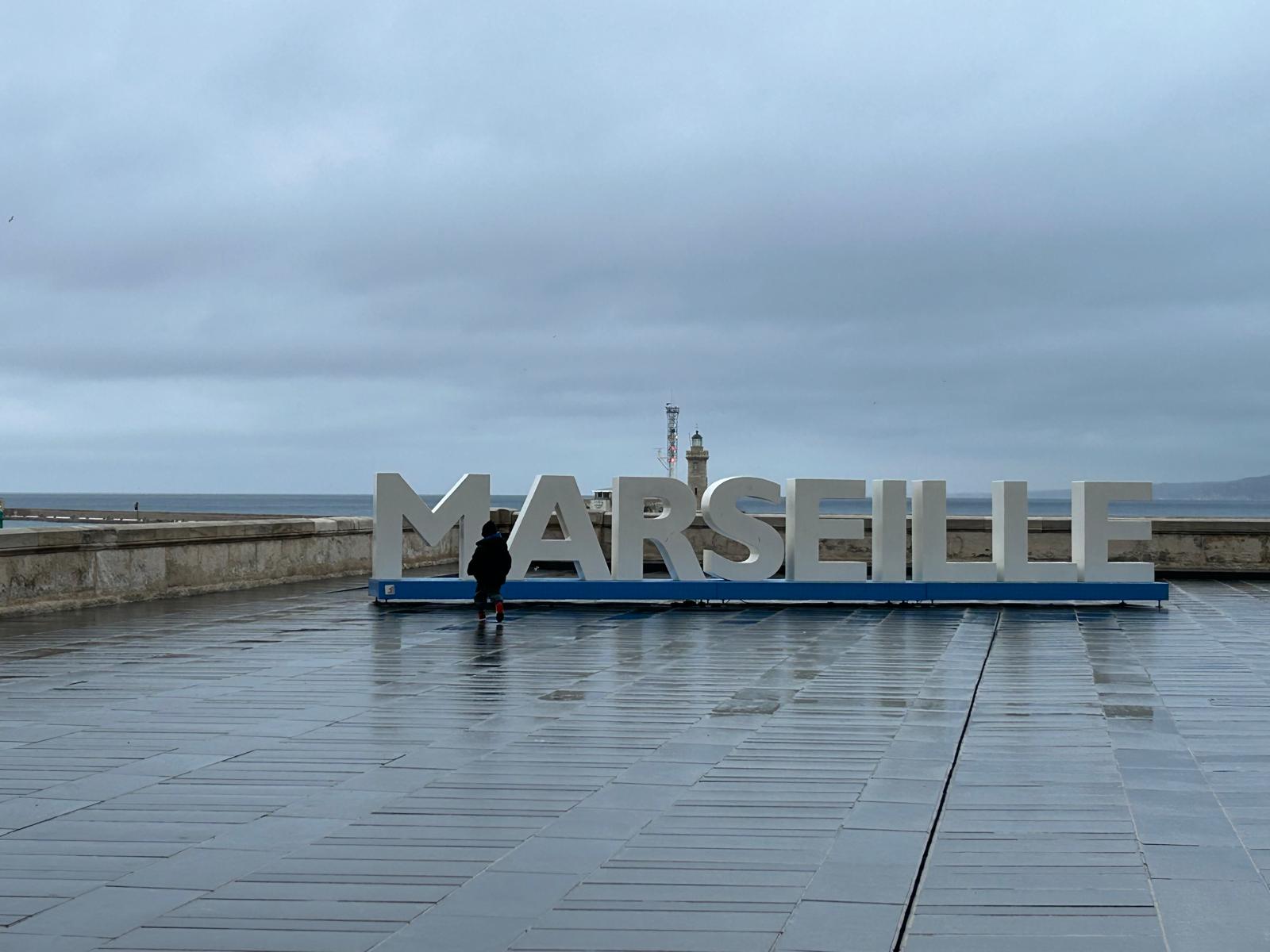
Seventeenth-century Marseille was in the grip of such a vast darkness—one in which the sky closed over the city like a shroud and every threshold turned into a silent scene of farewell. The Black Death, slipping past the gilded doors of wealthy mansions, spared neither rank nor fortune. And yet, in the city’s most desperate days, four thieves—who brazenly entered homes the living feared to approach and the dead had long abandoned—held in their hands the sharp, aromatic key to survival in an age when medicine and authority had fallen to their knees.
These men walked into plague-stricken houses everyone fled, gathered the dead’s jewelry, touched corpses—yet, inexplicably, were never affected by the disease. When they were caught, the bargain offered to them was, in truth, the confession of an entire era’s helplessness: “If you wish to escape execution, give us your secret to staying alive.” What would lead them to the gallows was not the gold they stole, but that mysterious immunity that defied death itself. And the secret they traded for their lives in the shadow of the scaffold was neither a costly elixir nor a complicated procedure. The thieves had held death at the doorstep with a biting vinegar—used to wash their hands and gargle—infused with wormwood, rosemary, sage, and lavender. They had, in other words, worn nature’s scents and gifts like a shield.
That sharp taste and scent was, in fact, an answer offered by the street and by ancient knowledge. It was the most concrete expression of what the modern world has yet to fully grasp: “autonomous health.” Against an outlook that severs people from their own power to recover and turns them into passive objects in the hands of vast systems, this vinegar formula proclaimed that healing is sometimes found far from institutions—in the womb of the earth and in one’s own inner strength.
Echoing through Marseille’s streets, this enigmatic knowledge gradually became legend, crossed the waves of the Mediterranean, and reached the humid neighborhoods of Istanbul—extending all the way to the desk of Chief Physician Mustafa Behçet Efendi. In the nineteenth century, as cholera pressed at the city’s gates, Behçet Efendi—mindful also of the poor—recommended in his Treatise on Cholera that the public, especially those living in narrow streets where the sun seldom entered and houses leaned into one another to breathe, protect themselves with this “Four Thieves Vinegar.” For he knew that although epidemics may be the work of microscopic organisms, their effects are always shaped by the depth of social and economic fissures. Pandemics strike society’s weakest links more harshly—through poverty and inadequate infrastructure.
History is a disquieting cycle of repetition. The scenes change, but the face of the victim does not: from the Black Death to today’s modern crises, the bill has always been left at the same cold threshold—the door of the most vulnerable. Any structure that rises to the skies with a promise of healing, if its mortar lacks justice, turns into a cold fortress that breeds despair, a labyrinth without an exit.
In the end, Ivan Illich’s warning points to a truth more familiar than ever: by confining health to glittering technologies and vast corridors, the modern world quietly stripped people of the power to face their pain and to draw their healing from nature. The more complex and professionalized a system becomes, the more—ironically—it can send its true subject, the human being, farther away: into an exile that leaves them a stranger to their own healing.
Dr. Emrah Tüncer