
02 March 2026
Evidence-Based Occupational Therapy Class Covers Assistive Technology Applications in Pediatrics
As part of the Evidence-Based Occupational Therapy course, our graduate occupational therapist Sennur Dural joined students to present on “Assistive Technology-Supported Evidence-Based Applications in Pediatrics.” The session was organized at the invitation of Dr. Beyza Aslı Bilsel, and included insights from Sennur Dural, who currently works at Bağcılar Belediyesi Engelliler Sarayı. She shared her professional experiences regarding the assessment and implementation of assistive technologies in pediatric occupational therapy based on evidence-based practices.
As part of the Evidence-Based Occupational Therapy course, our graduate occupational therapist Sennur Dural joined students to present on “Assistive Technology-Supported Evidence-Based Applications in Pediatrics.”
The session was organized at the invitation of Dr. Beyza Aslı Bilsel, and included insights from Sennur Dural, who currently works at Bağcılar Belediyesi Engelliler Sarayı. She shared her professional experiences regarding the assessment and implementation of assistive technologies in pediatric occupational therapy based on evidence-based practices.
Dural detailed the applications of assistive technologies in pediatrics, including mobility and positioning aids, adaptive writing and learning tools, augmentative and alternative communication systems, sensory integration support equipment, and daily living adaptations. Individualized evaluations are conducted considering the child’s motor skills, cognitive level, sensory sensitivities, and environmental factors. Collaboration with families and educators is emphasized for goal setting, progress monitoring, and adaptation of devices or strategies as needed. Students had the opportunity to observe how these technologies enhance children’s independence, social participation, and daily living skills through practical examples.
The session highlighted the importance of adaptive and supportive technologies in increasing participation in daily life, as well as the role of individualized goal setting and multidisciplinary teamwork. Case-based examples enriched the class, providing students with up-to-date and practice-oriented knowledge of assistive technology use in pediatric occupational therapy.
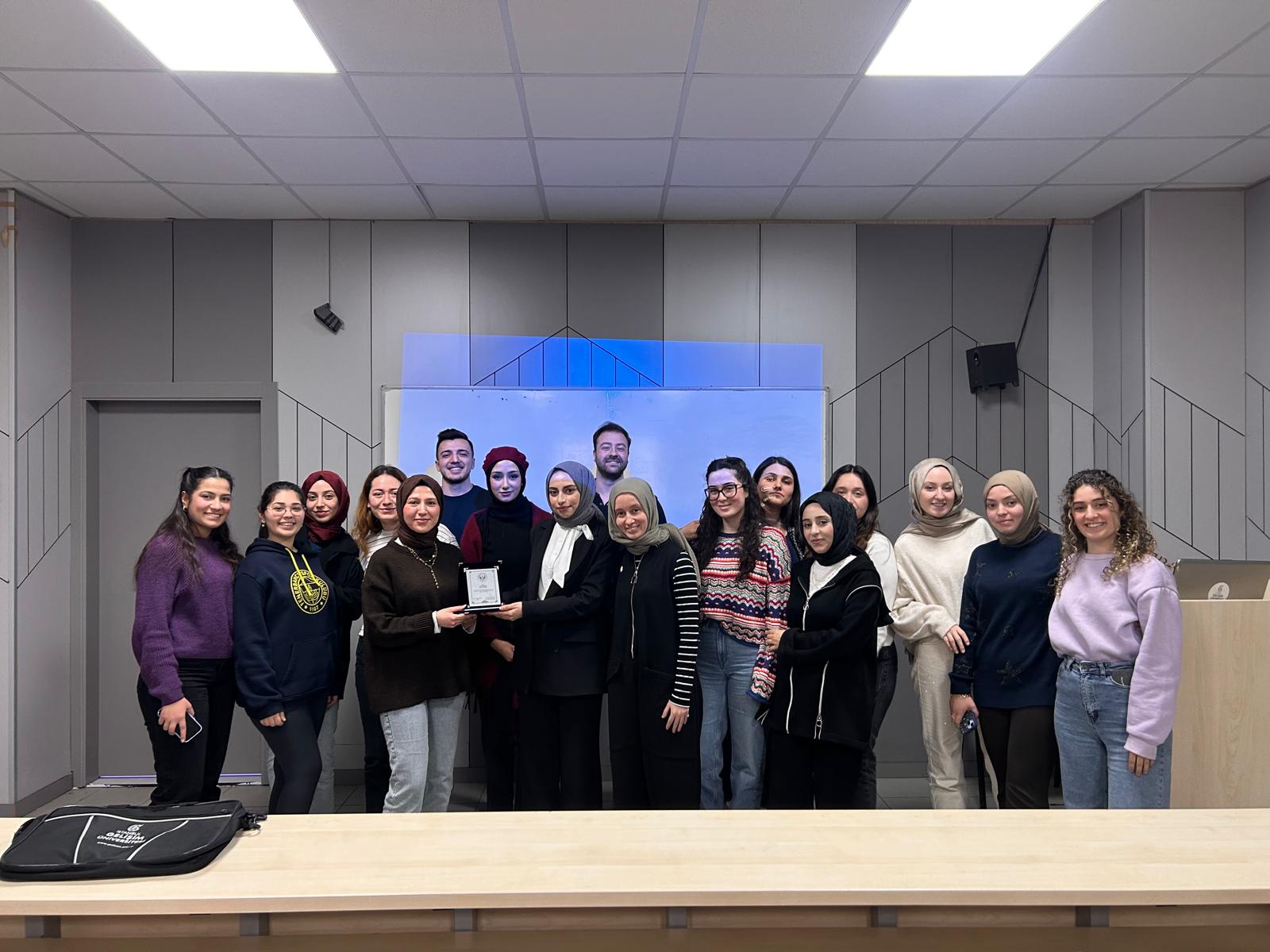
At the end of the session, as part of Clinical Practice II, a student who completed their professional practice under the supervision of Sennur Dural presented her with a plaque in recognition of her contributions and knowledge sharing.
We sincerely thank our graduate occupational therapist Sennur Dural for her valuable insights and participation.