
11 September 2026
New Book Chapter by Our Research Assistant Nilgün Yıldız: “Measurement and Analysis Methods in Biomechanics”
A new book chapter entitled “Measurement and Analysis Methods in Biomechanics,” co-authored by Nilgün Yıldız, Research Assistant at the Department of Physiotherapy and Rehabilitation, has been published in the book “Fundamentals of Biomechanics” by Akademisyen Publishing House. The chapter provides a comprehensive overview of contemporary biomechanical measurement and analysis methods used for the objective and reliable assessment of human movement.
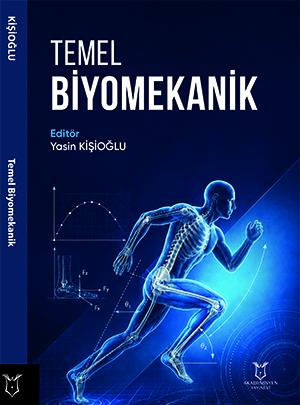
A new book chapter co-authored by Nilgün Yıldız, Research Assistant at the Department of Physiotherapy and Rehabilitation, Faculty of Health Sciences, Istanbul Gelisim University, has been published in the book “Fundamentals of Biomechanics” by Akademisyen Publishing House.
Edited by Yasin Kişioğlu and published in 2026, the book covers a broad scientific framework ranging from the fundamental concepts of biomechanics to muscle, bone and joint biomechanics, gait and balance analysis, sports biomechanics, measurement methods, biomaterials, and contemporary technological applications.
A Contemporary Perspective on Biomechanical Measurement Technologies
The chapter, entitled “Measurement and Analysis Methods in Biomechanics”, was authored by Merve Koyuncu Cenikli, Zeynep Lide Uz, Nilgün Yıldız, Tayfun Efe, Sevdenur Aktaş, Çilen Tavşanoğlu, and Rüstem Mustafaoğlu. It focuses on contemporary measurement and analysis technologies used for the objective and reliable evaluation of human movement.
The chapter emphasizes the importance of analyzing human movement through quantitative and reproducible data rather than relying solely on observational assessment. In this context, it discusses force measurement systems, including dynamometers, force platforms, and pressure platforms, as well as motion analysis technologies involving optical marker-based and markerless systems and inertial measurement units (IMUs).
The authors also address electromyography (EMG), an important method for evaluating muscle activity, together with computer-based modelling and simulation approaches that can be used to estimate internal forces that cannot easily be measured directly, such as muscle forces and joint reaction forces.
Biomechanical measurement and analysis methods provide valuable opportunities in physiotherapy and rehabilitation for identifying movement impairments, objectively monitoring treatment outcomes, supporting clinical decision-making, and planning individualized rehabilitation programs. These technologies also have an important role in sports sciences and human movement research by enabling detailed assessments of performance and movement characteristics.
By presenting current biomechanical technologies together with their scientific and clinical applications, the chapter contributes an up-to-date resource for physiotherapists, researchers, academics, and students in health sciences.
As the Department of Physiotherapy and Rehabilitation, we congratulate our Research Assistant Nilgün Yıldız on this scientific publication and wish her continued success in her academic studies.